Demystifying OSI and TCP/IP Networking Models
August 3, 2026
·4 min read
·
When a service drops requests or an API call fails, troubleshooting often comes down to network communication. To diagnose network issues effectively, developers and system engineers rely on standard network models.
The OSI (Open Systems Interconnection) model and the TCP/IP model are the two foundational frameworks that describe how data moves across a network. Understanding these models helps you isolate failures, design resilient systems, and configure effective health checks.
What is the OSI Model?
The OSI model is a conceptual framework developed by the International Organization for Standardization (ISO) in 1984. It breaks network communication into seven distinct layers. Each layer serves a specific purpose and interacts directly with the layers above and below it.
Layer 7 - Application: The layer closest to the end user. It provides network services directly to software applications. Examples include HTTP, HTTPS, FTP, and SMTP.
Layer 6 - Presentation: Handles data formatting, encryption, and compression so that the receiving system can read the payload. TLS/SSL protocols operate here to secure data.
Layer 5 - Session: Establishes, maintains, and terminates communication sessions between local and remote applications.
Layer 4 - Transport: Manages host-to-host data transfer, error correction, and flow control. The primary protocols at this layer are TCP (Transmission Control Protocol) and UDP (User Datagram Protocol).
Layer 3 - Network: Responsible for packet routing and forwarding across different networks using logical addresses. IP (Internet Protocol) and ICMP operate at Layer 3.
Layer 2 - Data Link: Transfers data between nodes on the same physical network segment using physical hardware addresses (MAC addresses).
Layer 1 - Physical: Transmits raw bit streams over physical media, such as copper cables, fiber optics, or wireless radio frequencies.
What is the TCP/IP Model?
While the OSI model is a theoretical standard, the TCP/IP model is the practical architecture used by the modern internet. Developed by the U.S. Department of Defense, the TCP/IP model condenses network operations into four functional layers:
Application Layer: Combines the OSI Application, Presentation, and Session layers into a single operational tier. It encompasses high-level protocols like HTTP, SSH, and DNS.
Transport Layer: Corresponds directly to the OSI Transport layer. It guarantees end-to-end communication via TCP or unreliable fast transmission via UDP.
Internet Layer: Corresponds to the OSI Network layer. It defines how IP addresses route packets across interconnected networks.
Network Access (Link) Layer: Combines the OSI Physical and Data Link layers. It handles the physical transmission of data frames over Ethernet, Wi-Fi, or other local mediums.
OSI vs. TCP/IP Comparison
The table below illustrates how the seven layers of the OSI model map directly to the four layers of the TCP/IP model:
OSI Model Layer | TCP/IP Model Layer | Protocol Examples |
|---|---|---|
7. Application | Application | HTTP, HTTPS, DNS, SSH, SMTP |
6. Presentation | Application | TLS, SSL |
5. Session | Application | RPC, NetBIOS |
4. Transport | Transport | TCP, UDP |
3. Network | Internet | IPv4, IPv6, ICMP |
2. Data Link | Network Access | Ethernet, Wi-Fi (802.11) |
1. Physical | Network Access | Fiber Optic, Copper Wire |
Why Network Layers Matter for Health Monitoring
Understanding where your traffic flows within these layers helps you design better monitoring strategies for your infrastructure.
Layer 4 (Transport) Monitoring
A TCP check verifies that a network port is open and reachable by completing a standard three-way TCP handshake. If a database or web server fails to complete the handshake, the issue lies at Layer 4 or below (such as a network route failure, blocked firewall, or crashed process).
Layer 7 (Application) Monitoring
A successful Layer 4 check does not guarantee that your service is healthy. For instance, an Nginx web server might accept a TCP connection on port 80, but return a 500 Internal Server Error when serving an HTTP request. Layer 7 checks evaluate application-level behavior by verifying HTTP status codes, response headers, and payload content.
TLS/SSL Monitoring
Security checks focus on the Presentation/Application layer. Monitoring TLS endpoints ensures your SSL certificates remain valid before expiration causes widespread connection errors for users.
Monitor Your Infrastructure Across Every Layer with Crystade
Diagnosing issues across multiple network layers requires tools built to test endpoints at every level.
Crystade is a comprehensive SaaS platform built for cron job and health check monitoring. Whether you need lower-level protocol validation or deep application checking, Crystade provides the visibility your application demands:
Multi-Layer Endpoint Monitors: Set up continuous health checks for standard protocols, including HTTP, HTTPS, TCP, and TLS monitoring.
Cron Job Monitoring: Track recurring backend tasks and background jobs to catch silent failures early.
Incident Management: Receive real-time alerts when endpoints fail or performance degrades.
Public Status Pages: Share transparent uptime updates with your team and users automatically.
With flexible subscription-based billing, Crystade equips software engineering teams with essential uptime tools without operational overhead. Try Crystade today to keep your endpoints healthy across every layer of the network stack.
Share this post
Related Posts
Keep reading from this category

Master Cron Job Expressions: Syntax, Examples, and Best Practices
Learn how to read, write, and debug cron job expressions. Explore syntax rules, special characters, practical examples, and production monitoring strategies.

Understanding TCP: Architecture, Handshakes, and Monitoring
Learn how the TCP protocol establishes reliable connections, executes handshakes, and manages data flow. Discover how active TCP monitoring prevents critical outages.

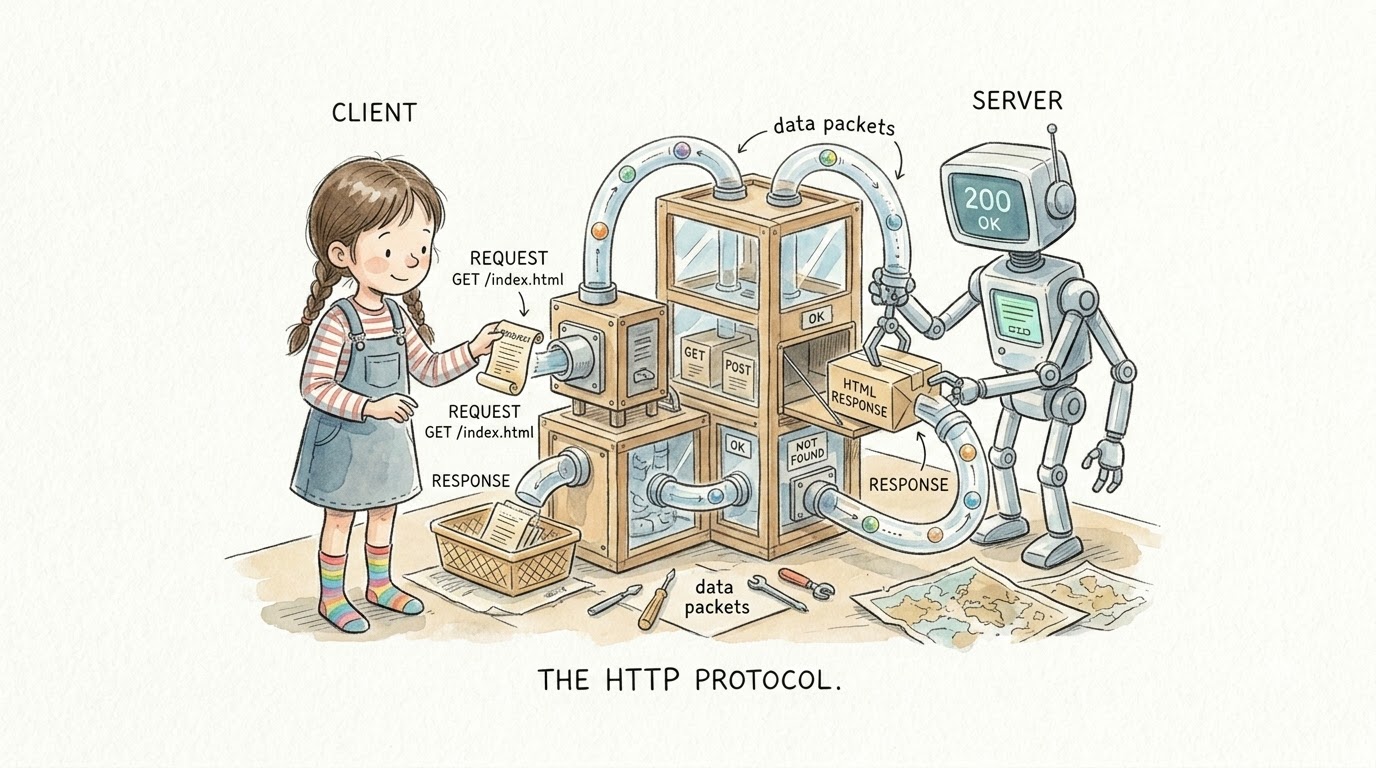
Understanding the HTTP Protocol: A Practical Guide for Developers
Master the fundamentals of HTTP, including request methods, status codes, headers, and protocol versions, along with key concepts for building reliable web applications.